
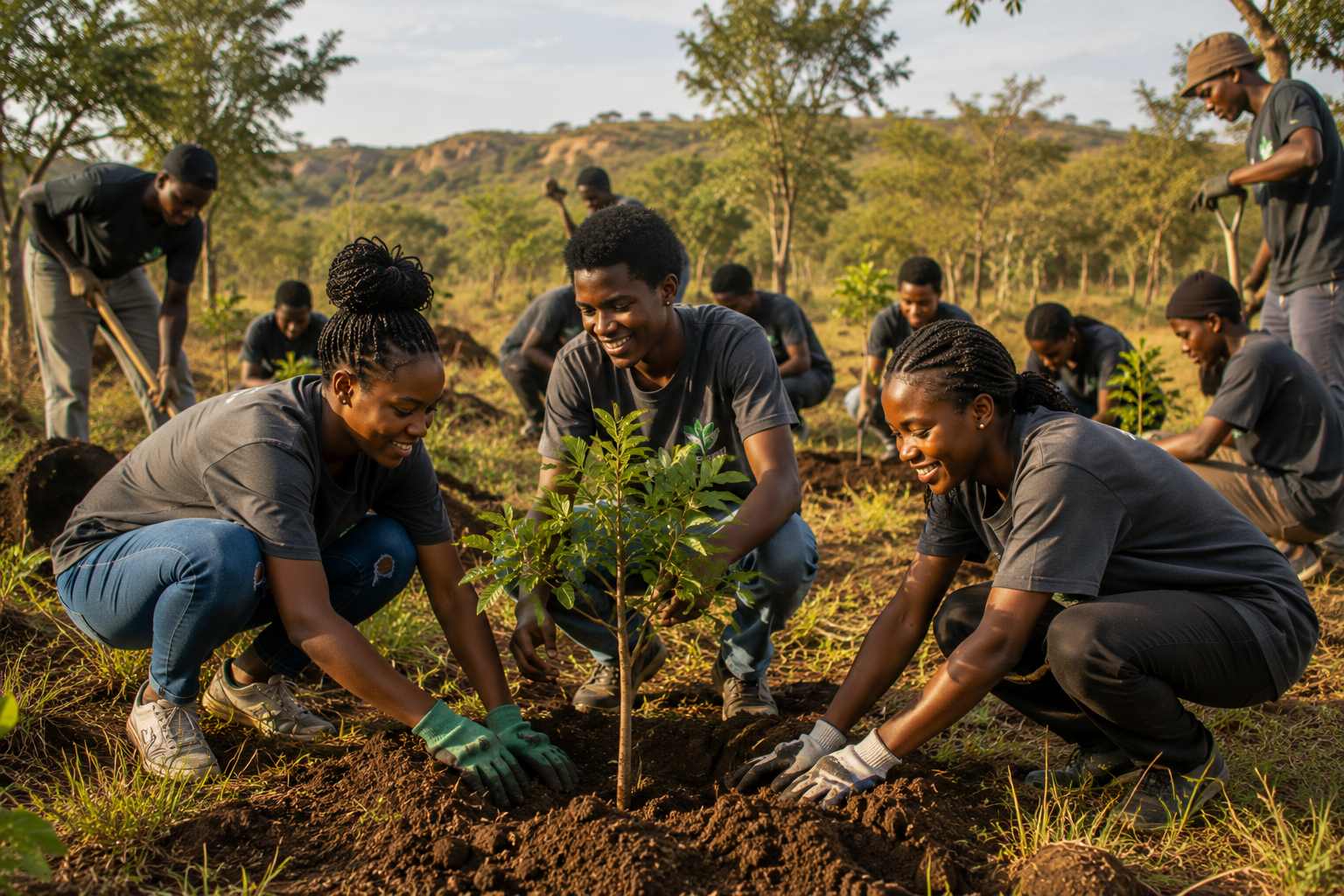
Protecting the environment.
Protecting livelihoods.
For communities whose lives and livelihoods depend on land, water and natural resources, environmental protection is not an abstract issue. It is part of everyday life.
For people living close to natural resources, environmental change is personal.
When land is degraded, water becomes less reliable or natural resources are depleted, the effects are not felt equally.
Families whose livelihoods depend directly on agriculture, land and natural resources can be particularly vulnerable.
That is why IAPZ places environmental protection within its wider work to reduce poverty, strengthen communities and support sustainable livelihoods.
Our environmental work is connected to the realities communities face.
SUSTAINABLE NATURAL RESOURCES
Supporting the responsible use of resources on which communities depend.
ENVIRONMENTAL CONSERVATION
Promoting practices that protect the natural environment.
COMMUNITY LIVELIHOODS
Recognising the connection between healthy ecosystems and household livelihoods.
SUSTAINABLE AGRICULTURE
Supporting approaches that connect food production with responsible resource use.
RENEWABLE ENERGY
Exploring practical alternatives that can reduce dependence on unsustainable energy sources.
ENVIRONMENTAL AWARENESS
Helping communities understand how environmental decisions affect everyday life.
Poverty and environmental degradation can reinforce each other.
This is a dynamic development relationship that IAPZ seeks to address through targeted community support, rather than a universal or inevitable cycle.
Vulnerability Pathway
Resilience Pathway
Healthy land is part of a healthy livelihood.
For many communities, land is more than a physical resource.
It can support food production, income generation and household wellbeing.
IAPZ's environmental approach recognises the importance of using natural resources responsibly while strengthening communities' ability to manage their own development.
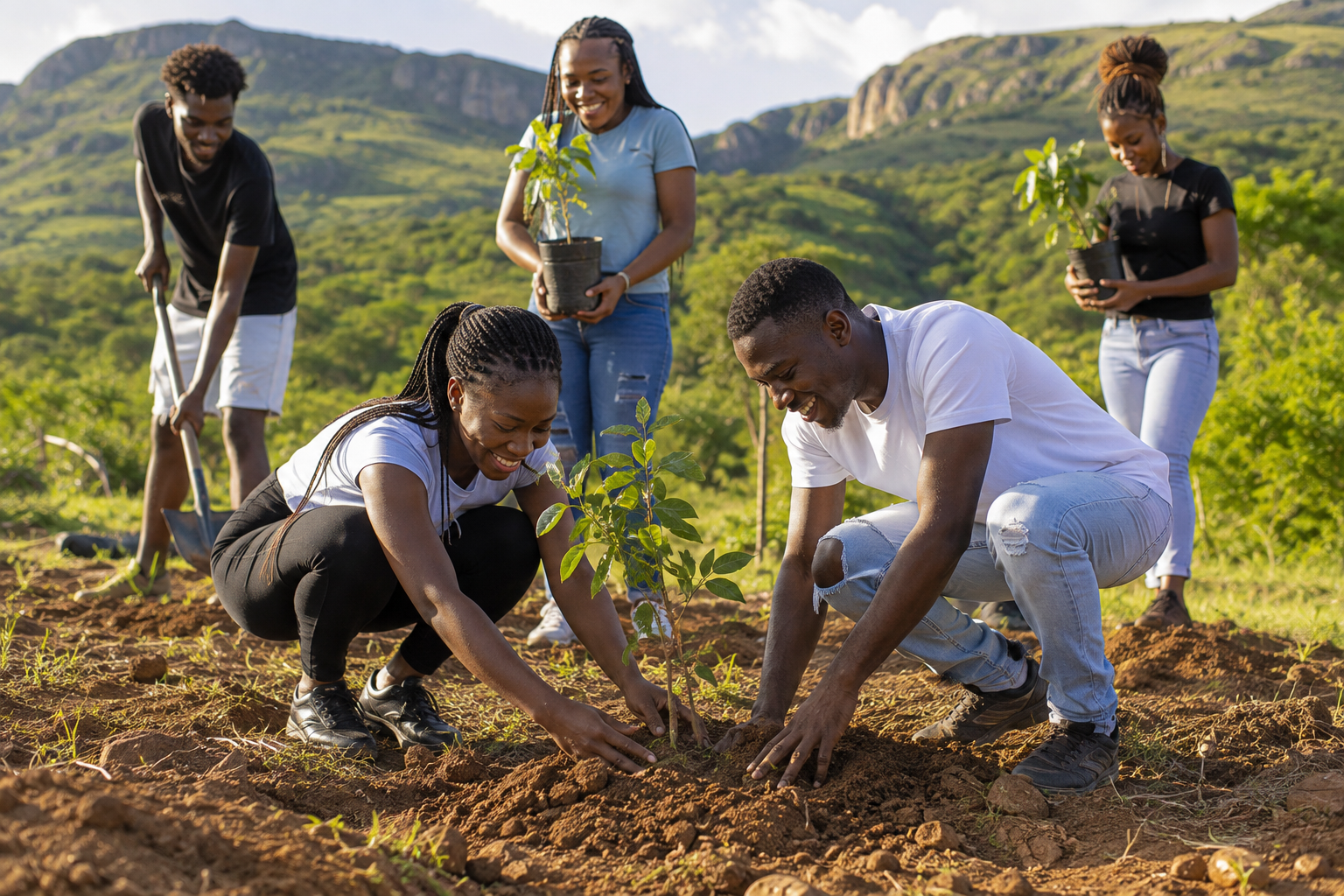
Water is a community resource.
Access to clean and reliable water is closely connected to health, food production, household wellbeing and local economic activity.
CLEAN WATER
Protecting local water sources safeguards family health and minimizes waterborne vulnerabilities.
COMMUNITY HEALTH
Reliable availability supports basic sanitation, hygiene, and stable domestic environments.
PRODUCTIVE USE
Enables small-scale agriculture, livestock care, and home enterprise ventures.
Food production and environmental responsibility belong in the same conversation.
Environmental sustainability also means thinking differently about energy.
IAPZ's environmental work includes an interest in practical approaches that can connect community needs with more sustainable resource use.
BIOGAS
IAPZ records the completion of a biogas project as one of its achievements. A practical example of exploring alternative approaches to energy and resource use.
Conservation works best when people are part of it.
Environmental protection cannot be separated from the people who depend on natural resources.
01 / UNDERSTAND
Understand the local environment and the unique ecosystems supporting rural and urban communities.
02 / PARTICIPATE
Create space for community voices to guide resource management and local development choices.
03 / PROTECT
Use resources responsibly to avoid premature depletion and secure long-term ecological balance.
04 / SUSTAIN
Think beyond immediate needs to secure viable resources for future households and generations.
Awareness is part of environmental protection.
People make decisions every day about land, water, energy, waste and natural resources. Understanding the consequences of those decisions can help communities make more informed choices.
LAND
Protecting topsoil and preventing erosion for sustained agricultural yield.
WATER
Managing watershed access and protecting against local contamination.
ENERGY
Exploring cleaner alternatives to relieve pressure on indigenous forests.
WASTE
Promoting responsible management and reduction of local refuse.
AGRICULTURE
Integrating conservation practices into daily food production routines.
NATURAL RESOURCES
Balancing immediate harvesting needs with long-term ecological health.
A sustainable environment supports sustainable livelihoods.
Environmental decisions are community decisions.
IAPZ's approach to community development places emphasis on participation and self-determination. Environmental protection becomes stronger when communities are able to understand local challenges, participate in decisions and contribute to practical solutions.
Ensuring local communities articulate their environmental priorities and challenges.
Involving residents directly in planning how local natural assets are managed.
Supporting community-led implementation of practical environmental initiatives.
Environmental challenges can also become opportunities for practical innovation.
Possible community pathways illustrating how ecological needs can transform into local enterprise value.
Converting discarded material into productive community assets and clean surroundings.
Utilizing clean energy technologies like biogas for cooking and small enterprises.
Optimizing water and organic inputs to increase crop yield per unit of resource.
Environmental protection starts with understanding who depends on the environment.
FARMERS
Dependence: Soil fertility, seasonal rainfall, and reliable water sources for crop cultivation.
Risk: Land degradation, erratic weather patterns, and topsoil loss.
Opportunity: Sustainable agriculture and soil conservation techniques.
YOUNG PEOPLE
Dependence: Long-term ecological stability and future resource availability.
Risk: Diminishing economic opportunities due to degraded rural environments.
Opportunity: Green skills, environmental education, and eco-enterprise initiatives.
WOMEN
Dependence: Household water collection, fuelwood gathering, and small-scale food production.
Risk: Increased labor burdens when local water and fuel sources become scarce.
Opportunity: Leadership in community resource management and alternative energy solutions.
SMALL ENTERPRISES
Dependence: Raw materials, local agricultural produce, and stable community purchasing power.
Risk: Supply chain disruptions caused by environmental shocks or resource depletion.
Opportunity: Eco-friendly business models and resource-efficient production.
RURAL HOUSEHOLDS
Dependence: Direct reliance on local natural assets for daily sustenance and heating.
Risk: Direct vulnerability to environmental degradation and resource scarcity.
Opportunity: Community conservation and decentralized clean energy adoption.
COMMUNITY ORGANISATIONS
Dependence: Social cohesion and collective wellbeing rooted in stable local environments.
Risk: Social strain arising from competition over degraded natural resources.
Opportunity: Participatory resource governance and collective action frameworks.
Our approach is practical.
UNDERSTAND
Understand environmental and community realities.
EDUCATE
Build awareness and practical knowledge.
PARTICIPATE
Include communities in decision-making.
IMPLEMENT
Support practical community-level initiatives.
SUSTAIN
Build approaches that can continue beyond individual projects.
PROTECTING THE ENVIRONMENT IS PART OF BUILDING RESILIENT COMMUNITIES.
A practical community environment model.
Click each element to explore its connection to community resilience.
COMMUNITY
For IAPZ, sustainability is about what remains after the project.
A sustainable approach is not simply about completing an activity.
It is about strengthening people's understanding, participation and ability to manage their own development.
Protecting the environment begins where people live.
From the way resources are used to the way communities plan for the future, environmental responsibility becomes meaningful when it is connected to everyday life.
Environmental sustainability does not stand alone.
It connects with the rest of IAPZ's work because poverty, livelihoods, education, food security, community development and environmental conditions are closely connected in the lives of the people and communities IAPZ serves.
COMMUNITY DEVELOPMENT
Strengthening local self-determination and participatory planning.
EDUCATION & SKILLS
Building practical knowledge for sustainable futures.
AQUAPONICS & FOOD SECURITY
Innovative food production linked to resource efficiency.
LIVELIHOODS & ENTERPRISE
Supporting household income and economic resilience.
YOUTH & GIRL CHILD
Creating inclusive opportunities for the next generation.
ENVIRONMENTAL SUSTAINABILITY
Protecting natural resources and community livelihoods.
Protecting the environment is part of protecting people.
It is about the land that feeds a family.
The water a community depends on.
The resources that support a livelihood.
The environment children grow up in.
And the choices communities make about their future.