Growing food.
Growing opportunity.
Exploring aquaponics and food security as pathways toward stronger communities, practical skills and resilient livelihoods by the Initiative Against Poverty in Zimbabwe (IAPZ).
What if food production could use resources more intelligently?
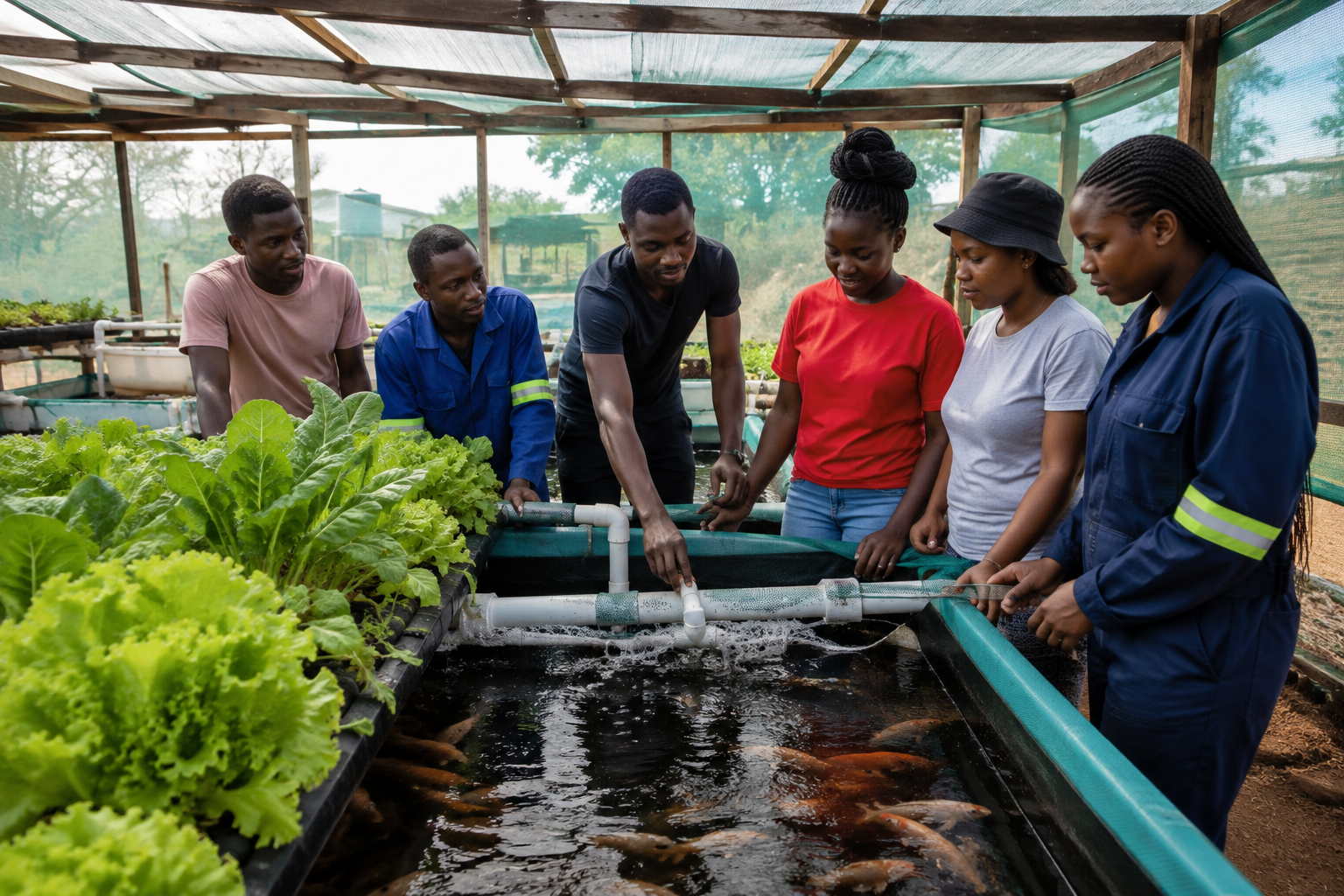
Aquaponics brings together aquaculture and hydroponic plant production in a connected system.
- Fish provide nutrients for plants.
- Plants help filter and clean the water.
- The water can then circulate back through the system.
This creates a fascinating relationship between FISH, WATER, and PLANTS, demonstrating efficient resource circulation in modern agricultural innovation across Zimbabwe.
One system.
Multiple possibilities.
Click each element of the aquaponics loop below to explore how components interact within IAPZ community projects.
FISH
"Fish are an important component of the aquaponic ecosystem, providing natural organic nutrients that can support healthy plant growth within closed-loop configurations."
WATER
"Water circulates continuously through the system, connecting the fish rearing tanks and plant growing beds in a balanced aquatic environment."
NUTRIENTS
"Fish waste and metabolic byproducts are converted by natural biological processes into a rich nutrient source within the system rather than being treated as waste."
PLANTS
"Plants utilize dissolved nutrients directly from the circulating water as part of their natural growth cycle, while helping purify the water."
FOOD
"The integrated system can produce both protein and fresh produce through a resource-efficient agricultural approach suitable for diverse community settings."
RESOURCES
"Aquaponics encourages forward-thinking about how water, available space, and valuable nutrients can be utilized more efficiently in food production."
Aquaponics became part of the IAPZ story in 2017.
IAPZ's published organisational history records the launch of its first aquaponics projects in 2017.
The work reflects a broader interest in practical approaches that connect food security, environmental sustainability, community development, practical skills, and social entrepreneurship across Zimbabwe.
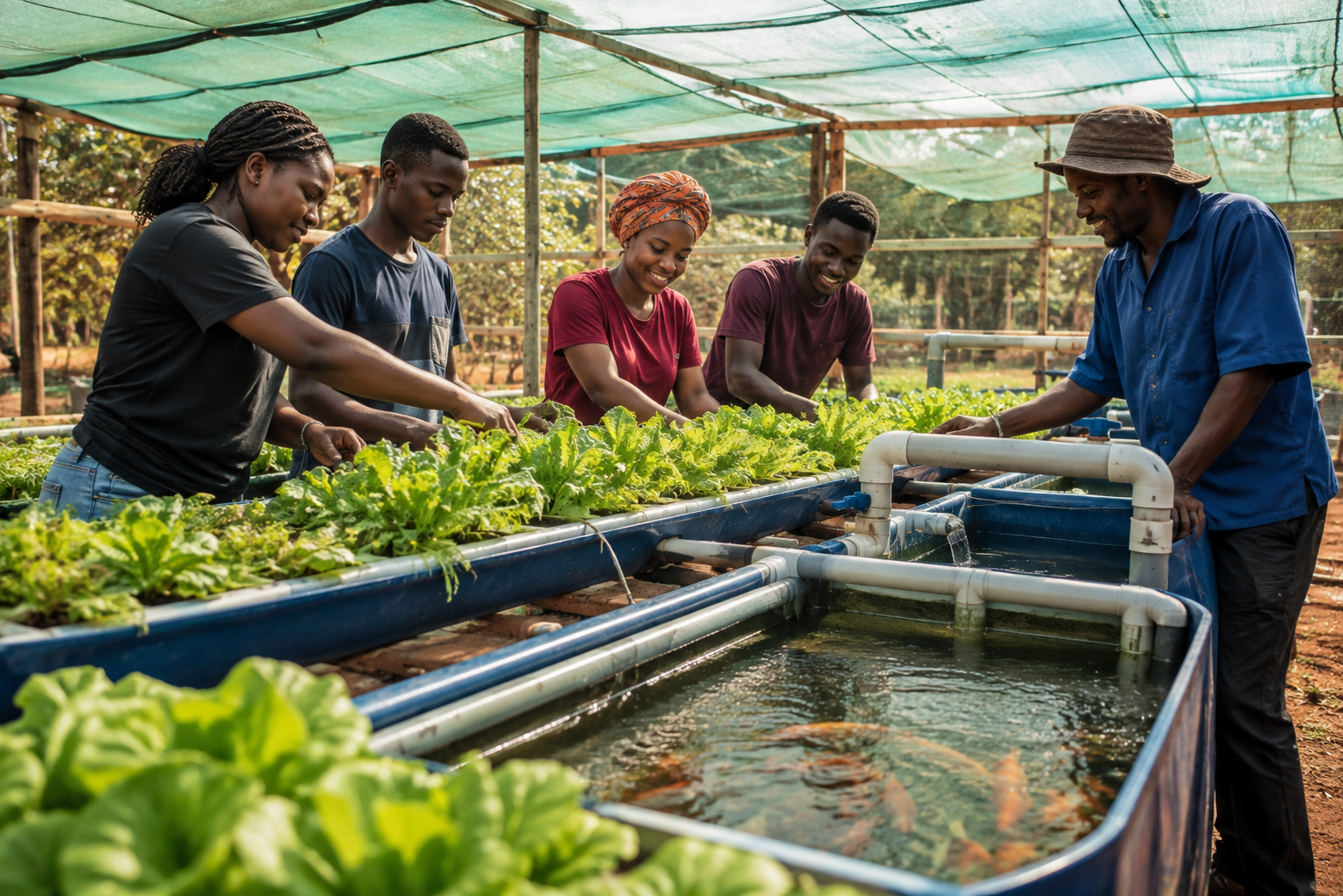
Food security is about more than food.
Food security is closely connected to household wellbeing, livelihoods, nutrition, economic opportunity and resilience.
FOOD
Access to sufficient and nutritious food for families and communities.
Reliable availability of fresh produce supports daily household nutrition and dietary diversity throughout the year.
NUTRITION
The quality of what people eat matters alongside sheer availability.
Access to vitamin-rich green vegetables and quality protein contributes directly to long-term community health outcomes.
LIVELIHOODS
Food production can connect with income and social enterprise.
Agricultural initiatives provide pathways for developing small-scale micro-enterprises and local market engagement.
SKILLS
Agricultural systems can become practical learning environments.
Hands-on involvement builds technical competence in water management, biology, and modern sustainable farming methods.
RESILIENCE
Local food systems can contribute to communities' ability to respond to challenges.
Diverse and efficient production methods help communities adapt to climatic and economic variability with greater confidence.
Inside the system.
Explore the integrated biological cycle of an aquaponics setup. Click any component below for details.
Select a system component above
Click on any stage in the aquaponics flow to discover how fish, water, plants, and natural filtration work together in harmony.
Every resource matters.
Thoughtful system design highlights the interconnected nature of water, space, and biological inputs.
WATER
Continuous circulation connects different parts of the system, maximizing the utility of every drop used.
SPACE
Integrated vertical and stacked production can create productive opportunities where conventional farming space is limited.
NUTRIENTS
Aquaponics demonstrates how natural outputs from one part of a system can become valuable inputs for another.
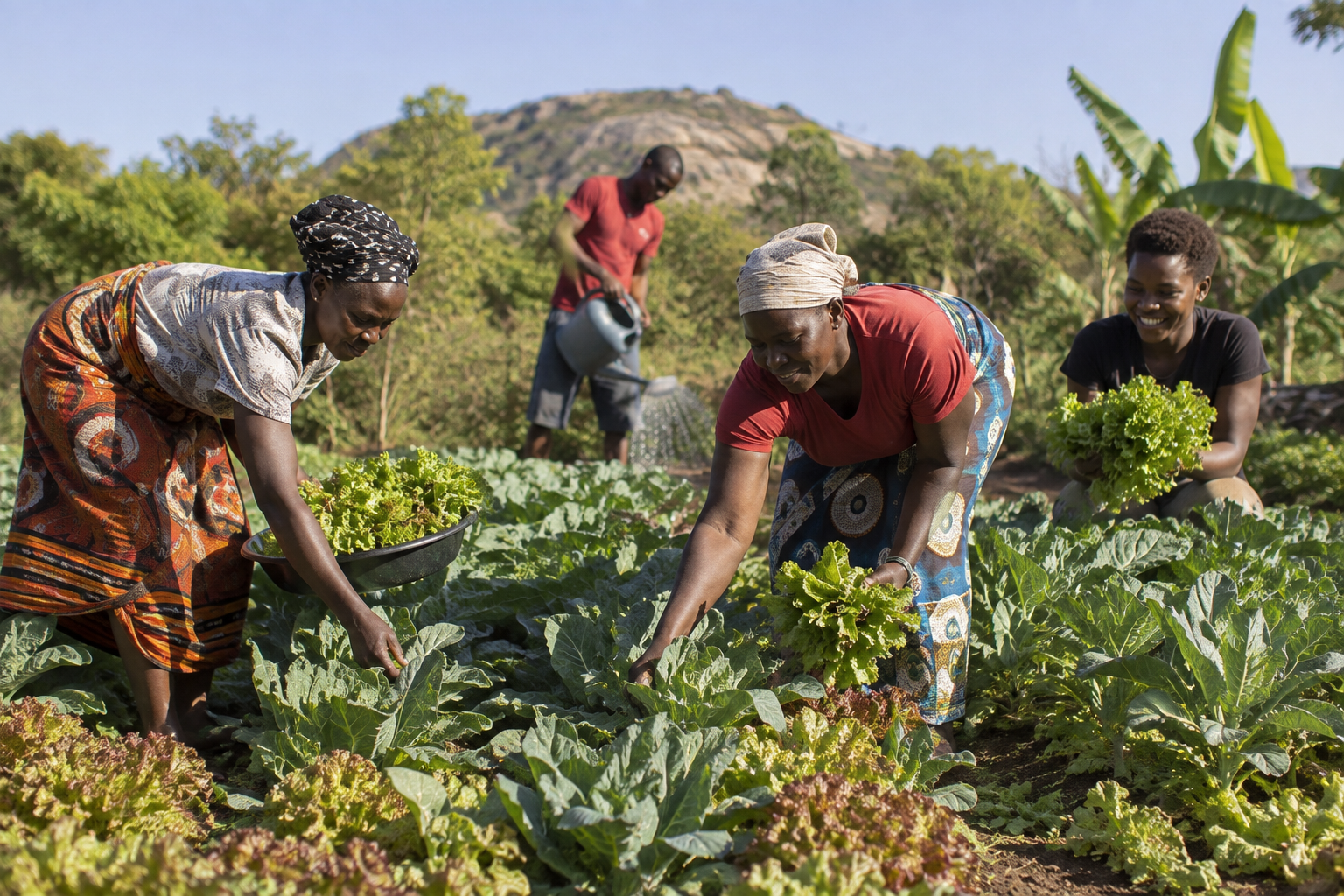
A farm can also become a classroom.
Aquaponics provides a practical environment for experiential learning across multiple disciplines.
Food production can create pathways beyond the harvest.
When food production is connected with skills, enterprise, and market thinking, it can become part of a broader livelihood strategy.
PRODUCTION
Growing fresh food and cultivating aquatic life reliably.
SKILLS
Acquiring technical knowledge and operational expertise.
VALUE
Creating nutritious produce and useful community assets.
ENTERPRISE
Engaging in micro-business planning and local exchange.
LIVELIHOOD
Supporting household wellbeing and economic stability.
RESILIENCE
Strengthening long-term community adaptability.
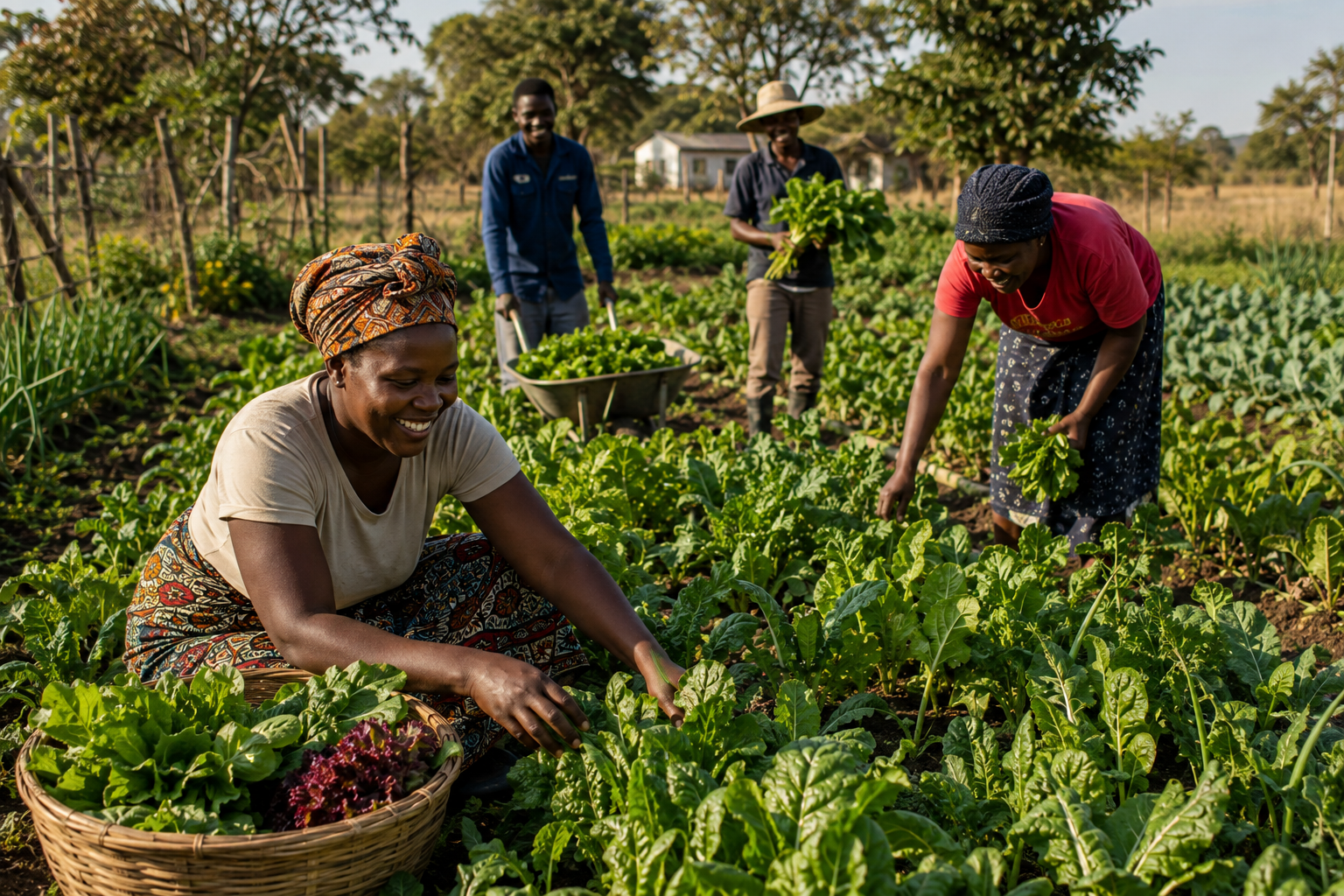
From individual production to community resilience.
Food security becomes stronger when communities have the knowledge, skills, and collaborative systems to participate in producing and managing food resources.
Working with nature.
Thinking about tomorrow.
IAPZ's wider development approach places emphasis on environmental protection because communities whose livelihoods depend on natural resources can be particularly vulnerable when those resources are degraded.
RESPONSIBLE RESOURCE USE
Considering how water, soil, and organic materials can be utilized thoughtfully and efficiently without waste.
ENVIRONMENTAL AWARENESS
Connecting food production with practical environmental understanding and ecological balance in local communities.
LONG-TERM THINKING
Considering resilience beyond a single harvest or project cycle to support sustainable multi-generational wellbeing.
Food security starts close to home.
For households and communities, access to reliable food is intimately connected to daily nutrition, health wellbeing, and economic resilience.
The goal is not only to grow food.
It is to grow possibility.
Aquaponics can sit at the intersection of social entrepreneurship, food production, environmental thinking, and skills development.
Click any node in the social enterprise ecosystem above to explore how commercial thinking and social impact unite.
Aquaponics teaches a bigger lesson.
Nothing exists in isolation.
The aquaponic system is a powerful reminder that resources, people, and processes can be deeply interconnected:
- Waste can become a valuable resource.
- Knowledge can become practical capability.
- Capability can create real economic opportunity.
- Opportunity can strengthen community resilience.
Our food security lens.
Five core components guiding IAPZ's approach to community food security and agricultural development.
ACCESS
Can people access food and the essential resources required to produce it reliably within their own communities?
AVAILABILITY
Can local food production contribute to a more stable, consistent, and dependable local food supply year-round?
NUTRITION
Does the agricultural approach actively consider the quality, dietary diversity, and nutritional value of harvested food?
LIVELIHOODS
Can food-related activity connect meaningfully with practical skills, micro-enterprise, and sustainable economic opportunity?
RESILIENCE
Can communities strengthen their capacity to adapt and respond effectively to changing environmental and economic conditions?
A small system can carry a big idea.
Aquaponics represents one inspiring example of how practical innovation can connect environmental responsibility, food production, education, and community development.
The bigger idea is not the technology alone. It is the possibility of creating systems that help people understand resources differently and explore new pathways toward sustainable resilience.
Grow food.
Grow skills.
Grow opportunity.
Grow resilience.
For the Initiative Against Poverty in Zimbabwe (IAPZ), food security is part of a wider commitment to helping communities build knowledge, practical capability, and pathways toward more resilient futures.